




Basic Life Support in Care Training (Standard 12 of The Care Certificate)
£20.00
Covering Standard 12 of the Care Certificate, this online training course educates the user on the basic administration of basic life support. It is broken down into 3 basic elements, initial assessment (primary survey), airway maintenance, and CPR.
The course aims to help the user understand what to do if an adult, a child, or an infant is choking, what DRABC stands for and how it allows you to perform a primary survey, and the knowledge the user is required to know as part of Standard 12 of the Care Certificate.
| Accreditations | CPD, Skills For Care |
|---|---|
| Course Duration | 35 mins (approx) |
| Languages | 41 |
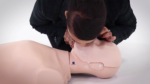
- Basic Life Support for Adults : In this section, you will learn the fundamental principles of providing basic life support for adults in emergency situations. Topics include recognizing cardiac arrest, performing CPR (Cardiopulmonary Resuscitation), and using an automated external defibrillator (AED). You will gain confidence in assessing and responding to adult patients who require immediate life-saving intervention.
- Treating a Choking Child : Choking is a common emergency, especially in pediatric care. This section will focus on the proper steps to take when a child is choking. You will learn how to identify the signs of choking. Perform the Heimlich maneuver or back blows and chest thrusts on a child, and provide effective assistance to relieve the obstruction.
- Obstructed Airways – Infants : Caring for infants demands specialized understanding in basic life support. Begin by learning how to identify and assist an infant with a blocked airway. This segment will teach you the methods for executing infant CPR, along with back blows and chest thrusts, equipping you thoroughly to manage emergencies with infants.
- Training and Record Keeping : Training and record-keeping stand as pivotal elements in upholding a safe and compliant care environment. Firstly, acknowledge the significance of continuous training to update your basic life support skills. Subsequently, acquire the knowledge to keep precise records of training sessions. Additionally, learn any basic life support incidents, thereby guaranteeing transparency and accountability.
After finishing this Basic Life Support in Care training, you’ll have the crucial skills needed to act quickly and with confidence during emergencies with adults, children, and infants. Your commitment to this training will improve the safety and well-being of those you care for. Let’s start your path to becoming a proficient and caring professional!
Related products


Oral Care
This comprehensive Oral Care Training course has been specifically developed to equip care workers with the essential knowledge and practical skills required to effectively support individuals in maintaining good oral hygiene. The course covers the importance of oral health, common oral care challenges faced by individuals in care settings, and best practices for providing assistance in a respectful, safe, and person-centered manner. Through this training, care workers will gain a deeper understanding of how to promote comfort, dignity, and overall well-being through proper oral care support.


Infection Prevention & Control Care Training (Standard 15)
Infection prevention is an incredibly important topic for all employees to understand. It is essential that every member of staff understands the risks, how to stay safe, and how to keep themselves and everyone around them free of infection.
This online training course teaches the user about what infections are, where they come from and how to prevent them. Additionally, it gives them a better understanding about personal hygiene and the correct hygiene practice's to reduce infection in a work setting.


Health and Safety in Care Training (Standard 13 Care Certificate)
This online training course covers Standard 13 of the Care Certificate. With over 100 residents in care homes across the UK injured every day, it is essential that care workers understand their health & safety responsibilities in order to reduce risk in the workplace.
This online course, which can be completed in just 35 minutes, also helps the user work towards compliance with The Management of Health and Safety at Work Regulations and RIDDOR.

Safeguarding Adults Training – Level 2 (Formerly SOVA)
This IIRSM approved Safeguarding Adults course - formerly known as Safeguarding Vulnerable Adults (SOVA) - covers levels 1 & 2 and is for anyone who works with, helps, or supports adults at risk. It covers the signs of abuse and explains what to do if you suspect something is happening to an adult at risk, or adults in a vulnerable situation. It's all about sensitive handling and timely intervention.


Privacy & Dignity Training in Care (Standard 7 Care Certificate)
The online Privacy & Dignity in Care Training course covers standard 7 of the Care Certificate. The course provides the user with information about how both privacy and dignity can be respected and protected within a care setting.
This online course can be completed within 25 minutes and provides the user with a printable certificate upon completion of the end-of-training test.


Personal Protective Equipment Training (PPE)
The HSE estimates that roughly 9,000 PPE-related incidents occur each year. With that said, it is evident that employees who require PPE to safely complete their work understand the importance of wearing the PPE, how to wear it correctly, and how to maintain it.
This online training course gives the user an understanding of their duties under the Personal Protective Equipment at Work Regulations 1992. Additionally, it covers the types of PPE that might apply to you, as well as the signs that might be in a workplace showing the mandatory PPE and any warning signs.
 Fire Safety
 Mandatory Health & Safety
 Workplace Culture & Conduct
 Health & Social Care
 Safeguarding
 Food Safety
 First Aid
 Returning To Work Essentials
 Mental Health & Wellbeing
 GDPR & Cyber Security
 Leadership